


Failing to bat out the full 50 overs in an ODI is clearly less than idea. It often feels pretty disastrous, but need it be? There are obviously examples of teams winning, having failed to bat all available overs, but how often does it happen?
In this article, I take a closer look at the true cost of getting bowled out early. What is the real impact upon a team’s chances of winning?
A First Innings Question
I’m going to start what may seem to be obvious: this is essentially a question about what happens in the first innings of an ODI. If a team fails to bat out all overs in the second innings of the match, then there are two reasons (beyond the weather):
1. They won, with something to spare
2. They lost, being bowled out before reaching the target
Analysis based upon the two outcomes above might be interesting for another day. For today, however, my interest is in what happens when a team bats first and can’t bat for the full allocation of overs.
Excluding matches where the weather cut things short (even where Duckworth Lewis produced a winner), I found that my dataset (covering the past 25 years or so) included 2,186 ODIs in which the team batting first either completed its 50 overs, or was bowled out beforehand. Happily, that gives me a pretty decent sample size to work from.
How Do Win Rates Change?
If a team are bowled out short of using the full 50 overs, then can we identify what difference it makes to their chances of winning?
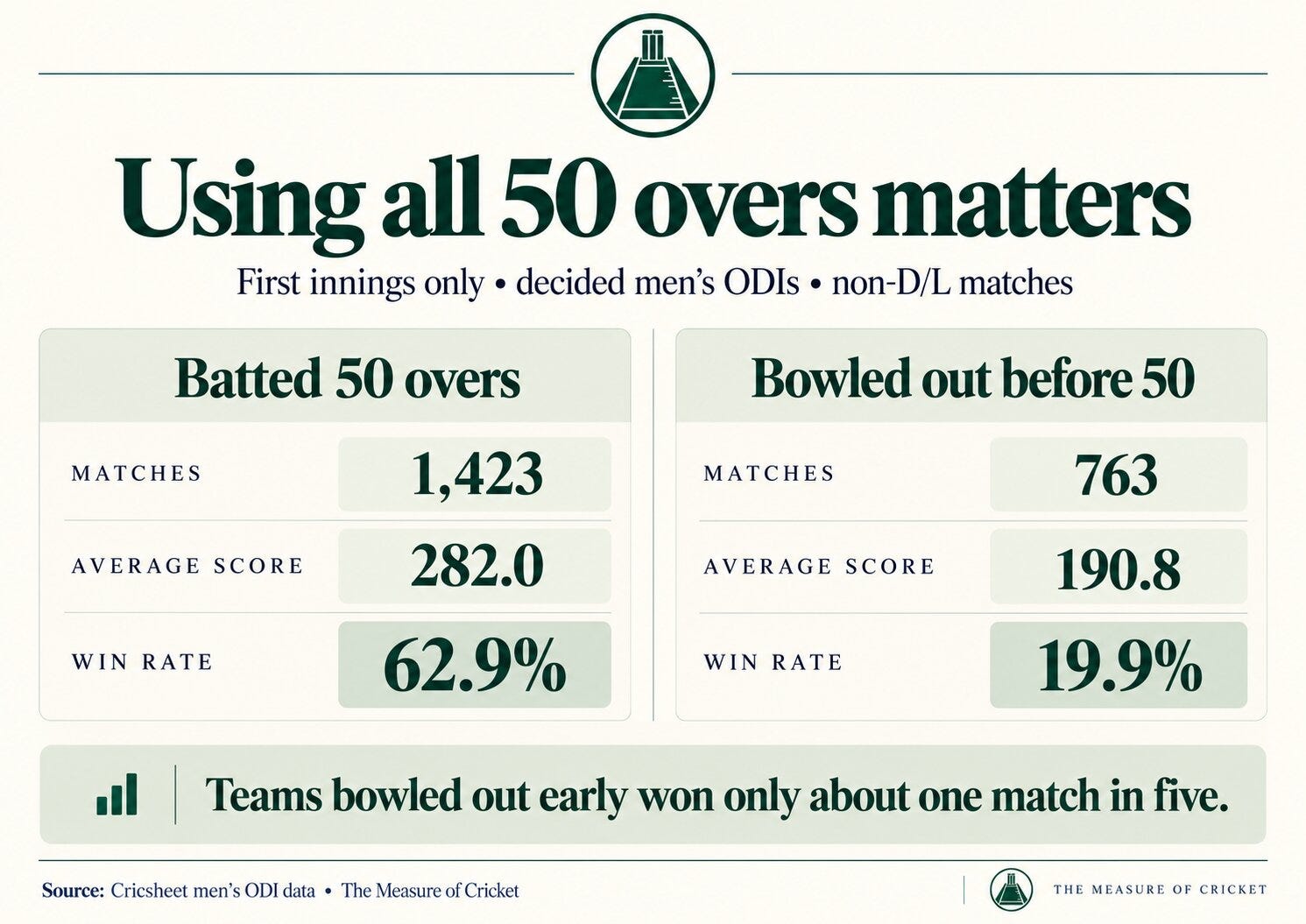
As we can see from the table above, teams failing to use their allocation won just 20% of the time. The win rate when using the full allocation of overs rises to 63%. It’s a huge difference and probably doesn’t come as a great surprise.
Of more interest is the impact, depending on when they were bowled out:
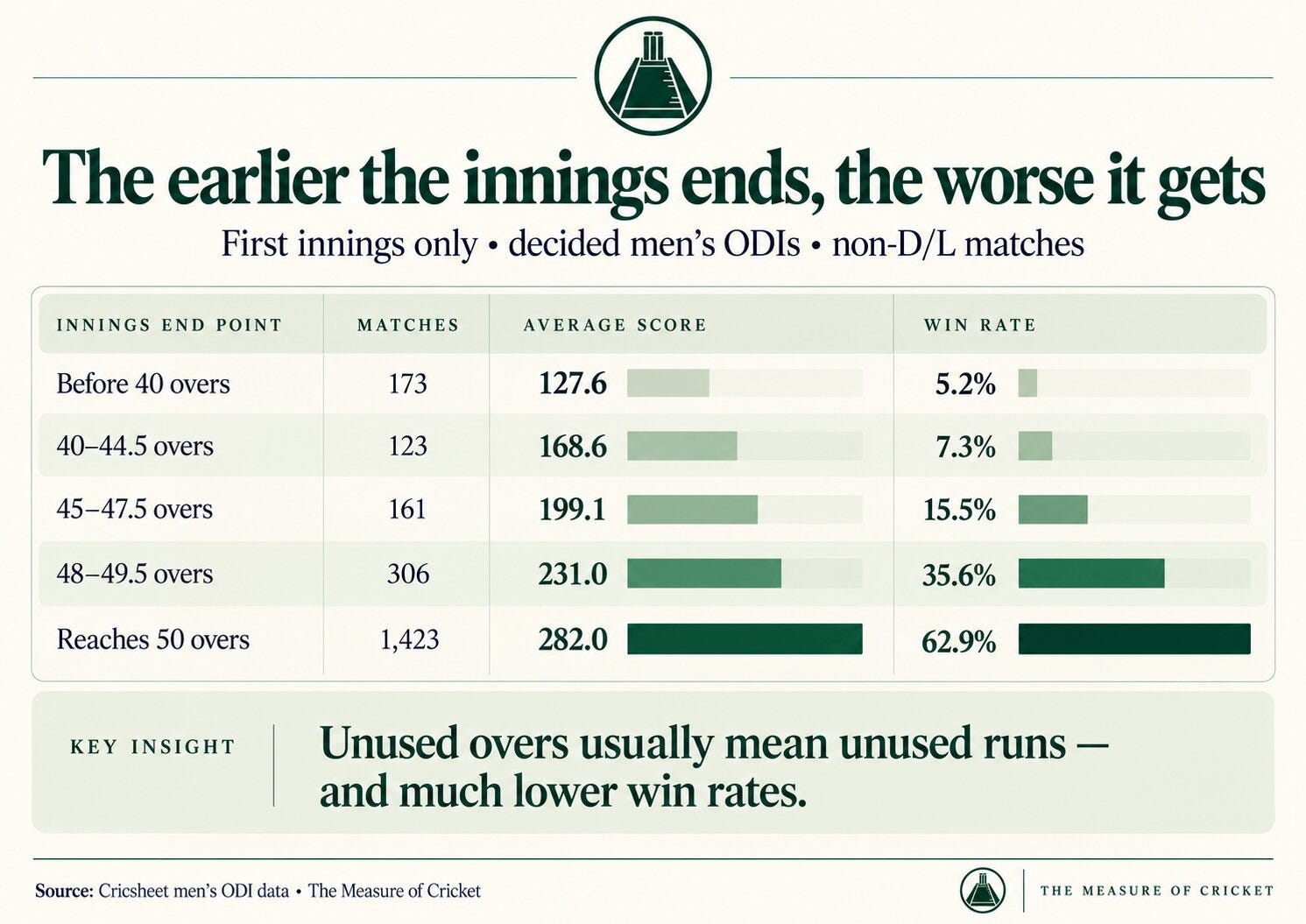
The earlier a side is dismissed, the lower its total and the worse its chances of winning become. Is this a case of so far, so obvious? It certainly fits in with conventional cricket wisdom.
Does It Still Matter If You Get The Runs On The Board?
I was intrigued by what happens when we consider how many runs are scored. After all, it seemed to me that there was a big difference between the team bowled out a few overs short, having racked up the runs, as opposed to a team bowled out with a paltry total.
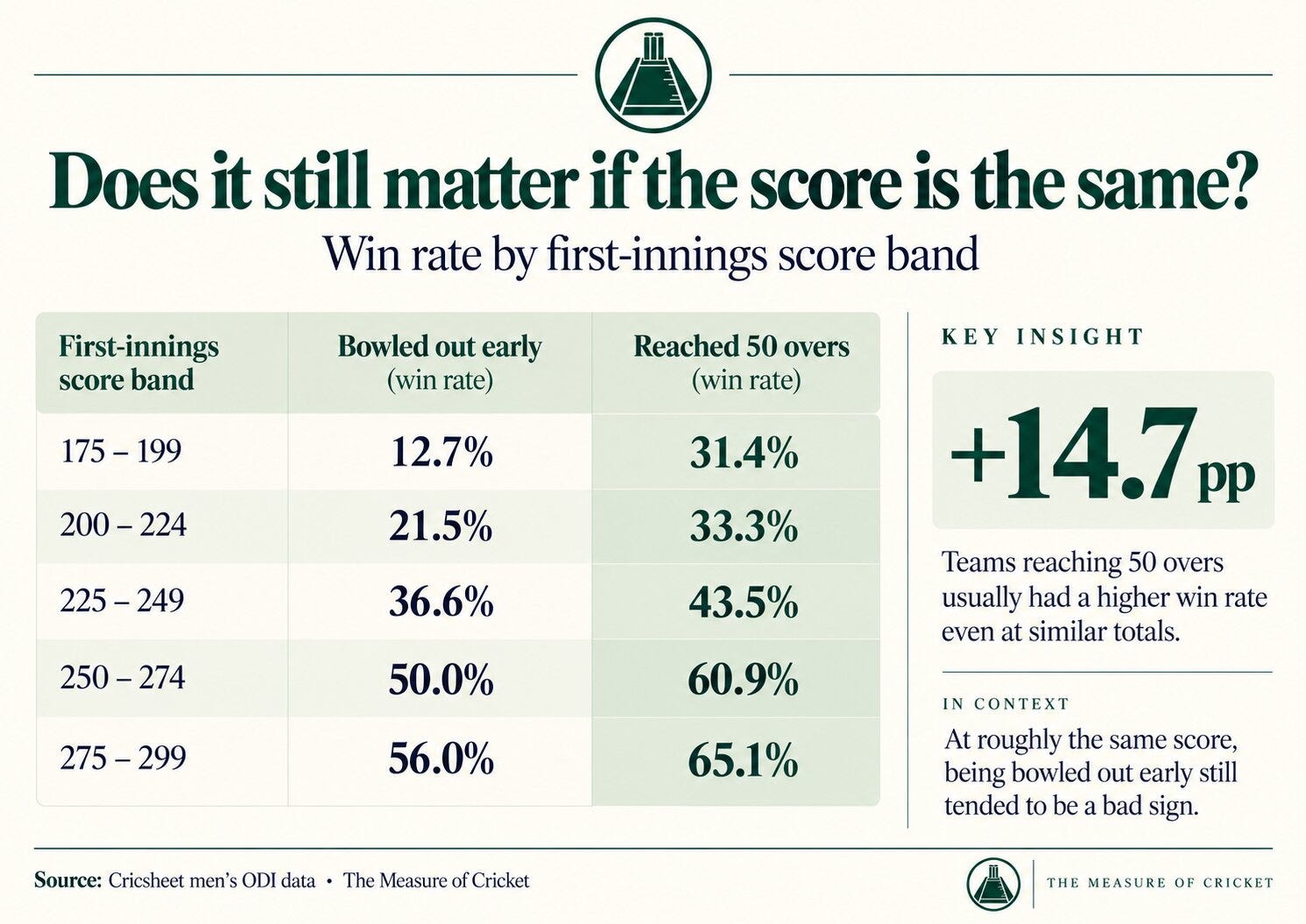
This is, in many respects, the most interesting finding. The main cost of failing to bat 50 overs is the runs left unscored.
Even when looking at similar totals, being bowled out early tends to be a bad sign. Ultimately, it often reflects a failure by the batting side to make the best use of the available conditions.