

Momentum is something that we frequently talk about when discussing cricket in all formats. We intrinsically feel that a big wicket, a stubborn partnership, or some magnificent boundary hitting can change momentum in a match.
Here at The Measure Of Cricket, I have looked at different actions within matches that might be expected to lead to a change of momentum. In this particular article, I have sought to consider the impact of a six within Indian Premier League (IPL) matches. Specifically, if a batsman hits a six, is he more likely to hit another six off the very next ball?
In essence, the study here is about whether that initial six brings about a genuine change in momentum. As I’ll explain, there are a few moving parts to consider within this analysis.
How I Approached The Analysis
My starting point was a database containing all IPL matches. I then looked for specific occurrences where a batsman hit a six and that same batsman faces the next legal delivery.
In taking this approach, I was very intentionally ruling out some circumstances (such as a six hit off the final ball of an over). I also excluded Super Overs, since outcomes here were likely to differ considerably from normal overs.
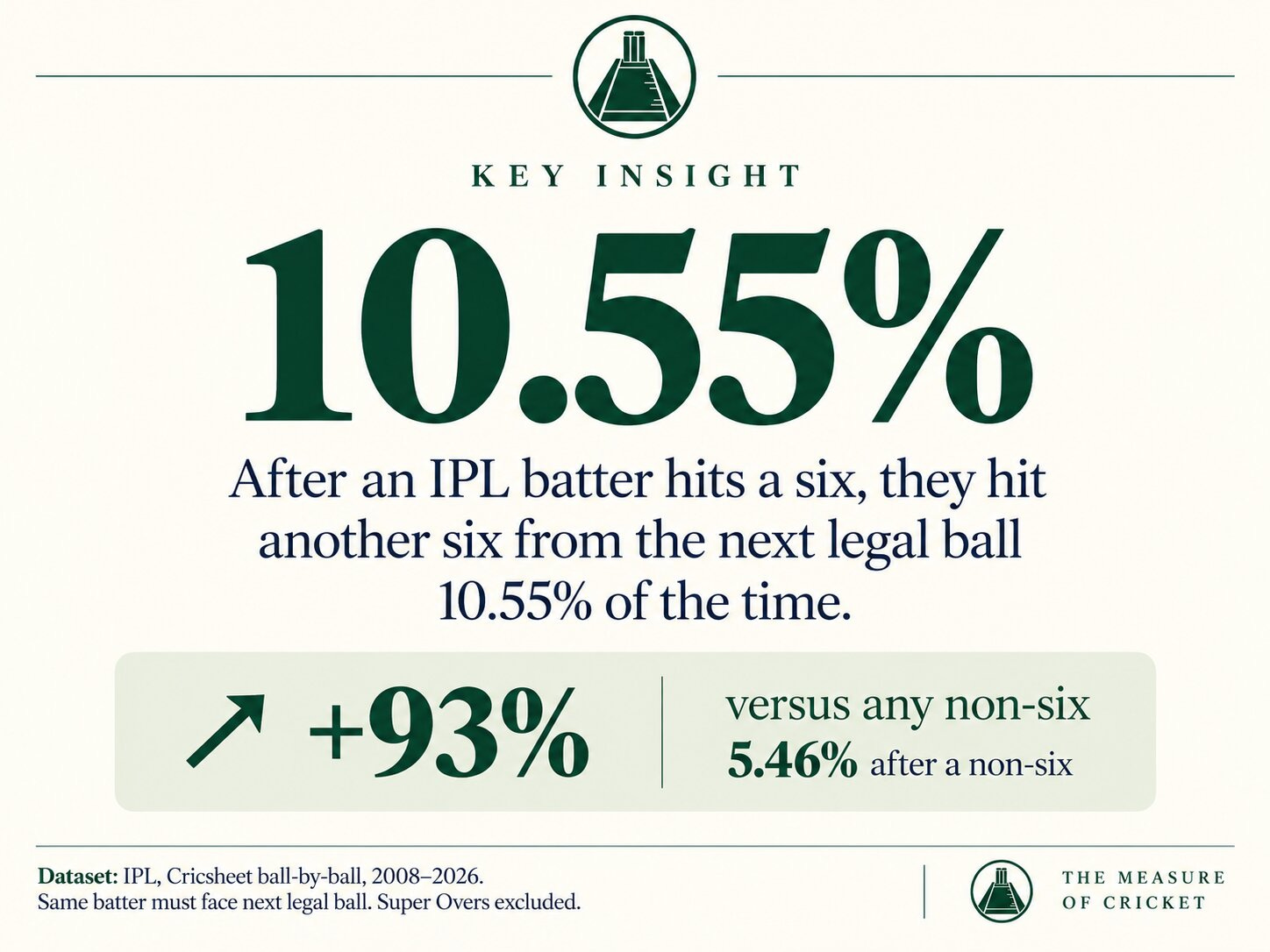
What I was left with was 13,097 eligible sixes. On 1,382 occasions, the batsman hit another six from the next ball.
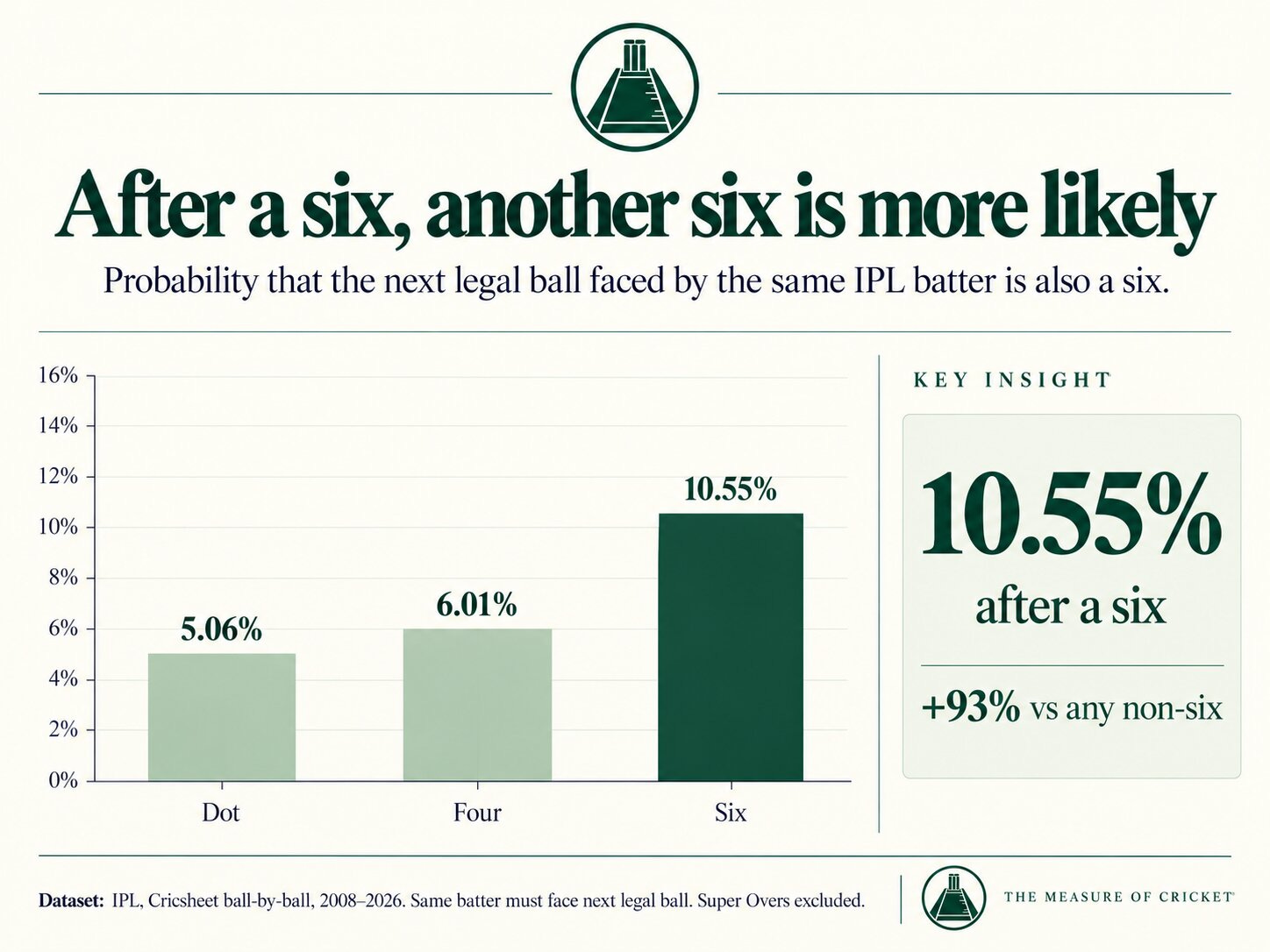
As we can see, there is a striking contrast here when we consider what might happen after a four has been hit, for example:
Do Sixes Happen More Frequently At The Death?
The analysis definitively shows us that a six is more likely to be followed by another six. But how solid is this finding really? After all, the likelihood of hitting a six surely changes, depending upon a number of other factors. It seemed to me that sixes might be more likely:
· at the death
· when powerful hitters are batting
· in favourable match ups for the batsman concerned
· when a team is looking to hit out
Quite quickly, it becomes clear that the raw figure on the likelihood of hitting a six off the next ball is actually quite limited, in terms of revealing too much.
If we split by phase of play, then we see the following:
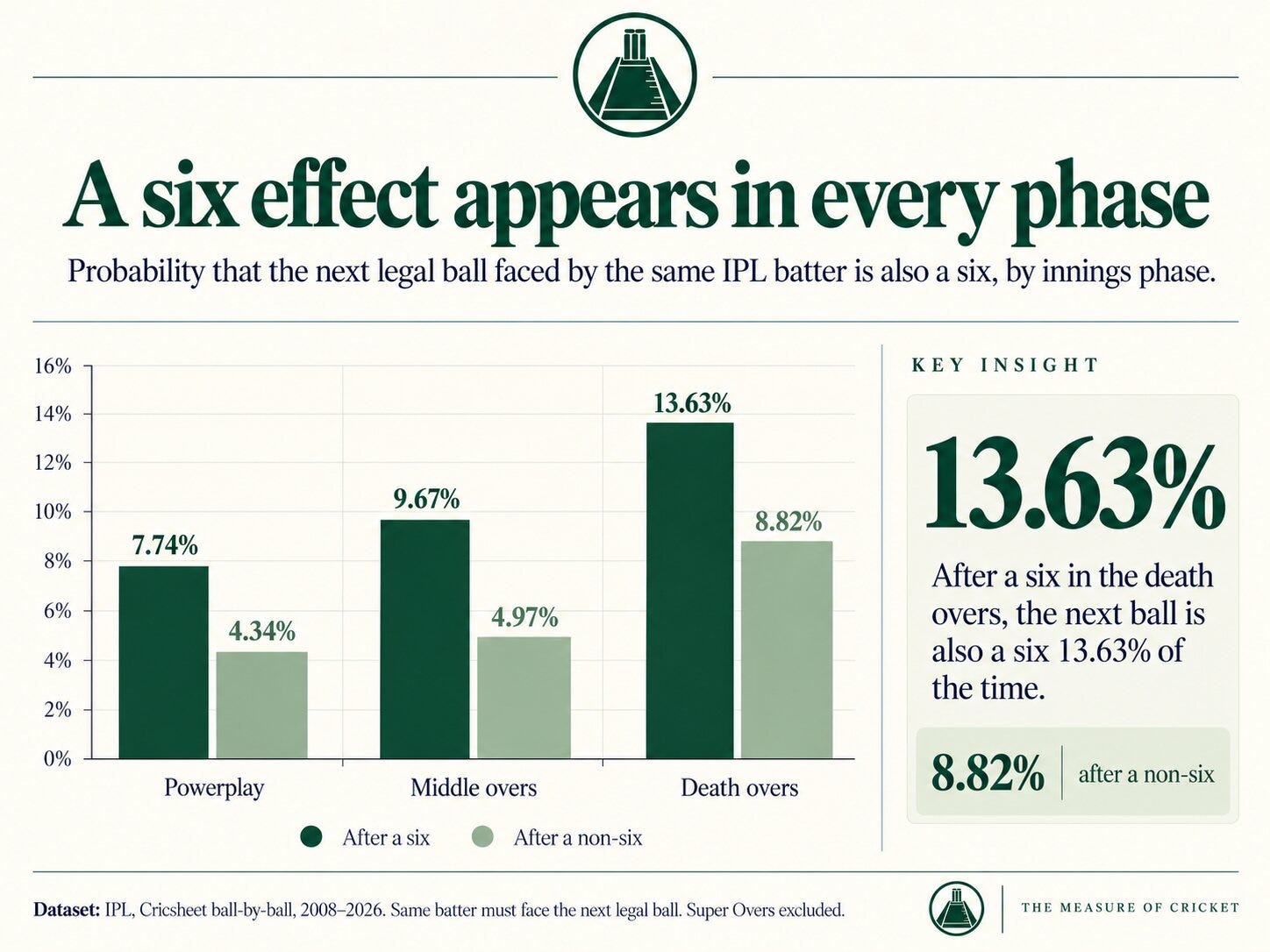
What’s striking here is that the chances of a six being followed by another six increases in each phase of the game. It is actually more likely in the Powerplay, in the Middle Overs and at the Death. Now we’re getting somewhere!
Making The Comparison Fairer
I also decided to go a step further here: phases of play are interesting, but they only tell part of our story. What happens if I match for innings, exact over, wickets lost and IPL era?
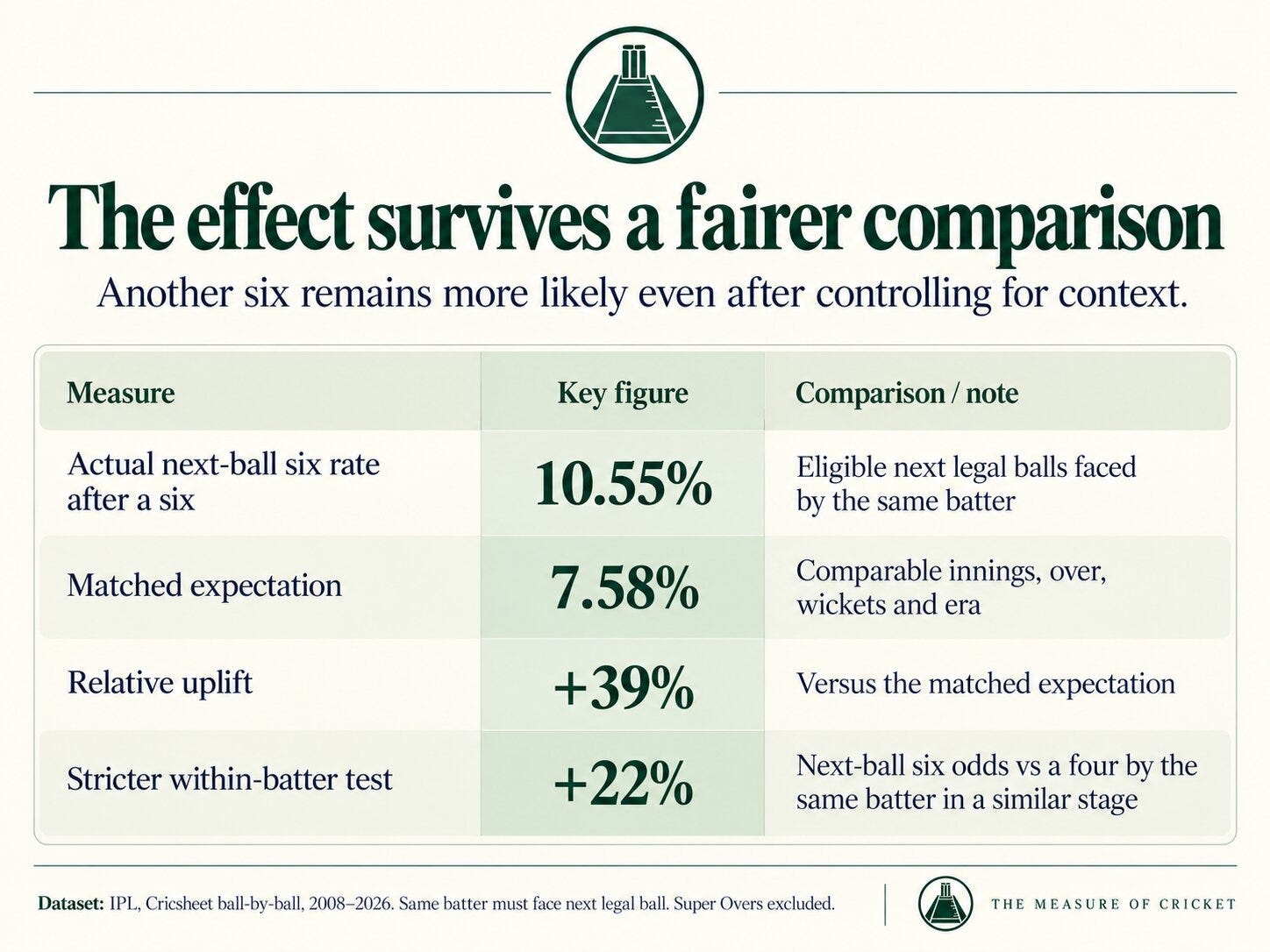
Having done so, I found that the chances of hitting a six (when the previous ball had not been hit for six) was 7.58%
Having hit a six, however, it rises to 10.55% for the next ball.
Now, with the data being controlled for match circumstances, we can see that a six gives us a 39% higher chance of a further six being hit off the next ball.
Have We Confirmed That Momentum Exists?
Is this evidence of momentum? I’m wary of drawing clear-cut conclusions from data and momentum is certainly something that’s tough to measure. What can be said, however, is that:
· A batsman is considerably more likely to hit a six, when having done so off the previous ball faced
· That increased likelihood is clear, even when we control for match circumstances